· North Atlantic Coast · 4 min read
13-Day Cruise Chain: Montreal → New York
How to combine multiple cruises from Montreal to New York into one continuous journey using compatible routes and ports.
Intro
This route is designed as a two-segment cruise chain that can be assembled from existing regional itineraries. The 13-day Montreal-to-New York profile is built for route continuity, not brand continuity, which means the value comes from compatible handoff design and realistic transfer flow.
Travelers frequently search this as the “Montreal to New York cruise chain” because it connects north atlantic coast ports through one practical handoff structure.
travelers who prefer shorter nautical distances and historically focused port cities. The chain is best suited for travelers who prefer broad regional coverage and can keep dates flexible by a few days. That flexibility matters because adjacent itineraries rarely align perfectly on every cycle, especially when weather or port rotation changes arrival order.
Route Overview
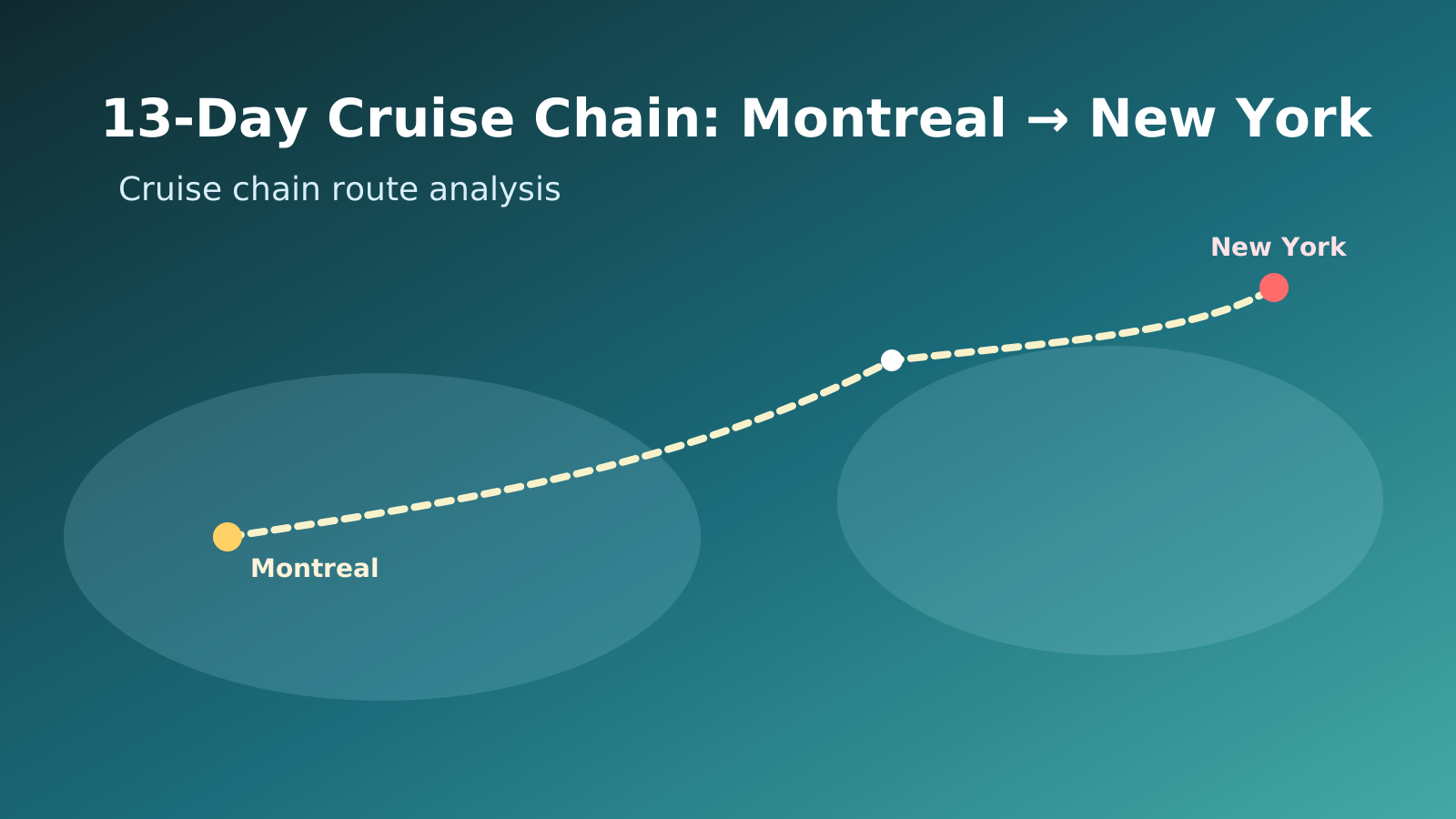
A common route order is:
- Montreal
- Quebec City
- Charlottetown
- Halifax
- Boston
- Newport
- New York
This order can vary without breaking the route logic. Some operators swap one or two calls while keeping the same start, connection port, and endpoint. For planning purposes, the most important element is that both segments repeatedly touch Halifax, where transfer logistics are practical and schedules are comparable.
Why It Works
The chain is operationally coherent because it mirrors how ships are already deployed in neighboring route clusters. In this chain, Halifax acts as the compatibility anchor because it appears in both segment ecosystems and supports independent disembarkation and embarkation operations.
The key compatibility layer is operational: repeated turnaround cycles, baggage handling cadence, and realistic transfer windows at the connection port. When those elements are present, cross-line chaining becomes materially easier.
Date flexibility is a structural advantage in chain planning, since adjacent itineraries often rotate on different weekly rhythms.
Segments
Segment 1: Montreal to Halifax (about 5-7 nights)
The St. Lawrence and Maritimes segment offers river-to-ocean transition with frequent seasonal operations. This segment usually defines the operational pace of the overall chain and determines how conservative the handoff buffer should be.
Compatibility checks for segment 1:
- Arrival timing into Halifax that leaves transfer margin.
- Clear terminal procedures and predictable passenger flow.
- Calendar repeatability that allows alternate pairing if needed.
Segment 2: Halifax to New York (about 5-8 nights)
The New England segment adds dense coastal city calls and concludes in a major US Atlantic gateway. The second segment provides the route’s destination character and sets final disembarkation context at New York.
Compatibility checks for segment 2:
- Departure window that can absorb minor first-leg variation.
- Port sequence that adds regional contrast instead of duplication.
- Final port operations aligned with onward travel logistics.
Availability
This chain is most workable in late summer through autumn foliage season, plus adjacent shoulder departures. Seasonality is important for this chain, but exact dates are less critical than keeping a flexible handoff window.
When seasonal frequency declines, this route is still viable, but only if transfer windows are treated as flexible planning variables.
Context
In the broader cruise landscape, this itinerary sits as a coastal heritage chain linking river-to-ocean transitions in eastern North America. It is effectively a connector format: longer than a short single-basin trip, but more modular than a continuous grand voyage.
This connector model trades ship continuity for route coverage, giving planners more room to adjust segments without losing the overall path.
FAQ
Why is Halifax the main connection point in this route?
Because this connection point has recurring schedule overlap and infrastructure suited to multi-line handoffs.
Can this chain be done with a same-day transfer at the handoff port?
Some pairings support same-day movement, though a one-night margin is usually more resilient.
Does this route require booking the same cruise line for both legs?
No. Multi-line combinations are typical when both segments share practical handoff ports.
Who is this route best suited for?
travelers who prefer shorter nautical distances and historically focused port cities, especially those who value schedule flexibility and destination range.