· Mediterranean · 4 min read
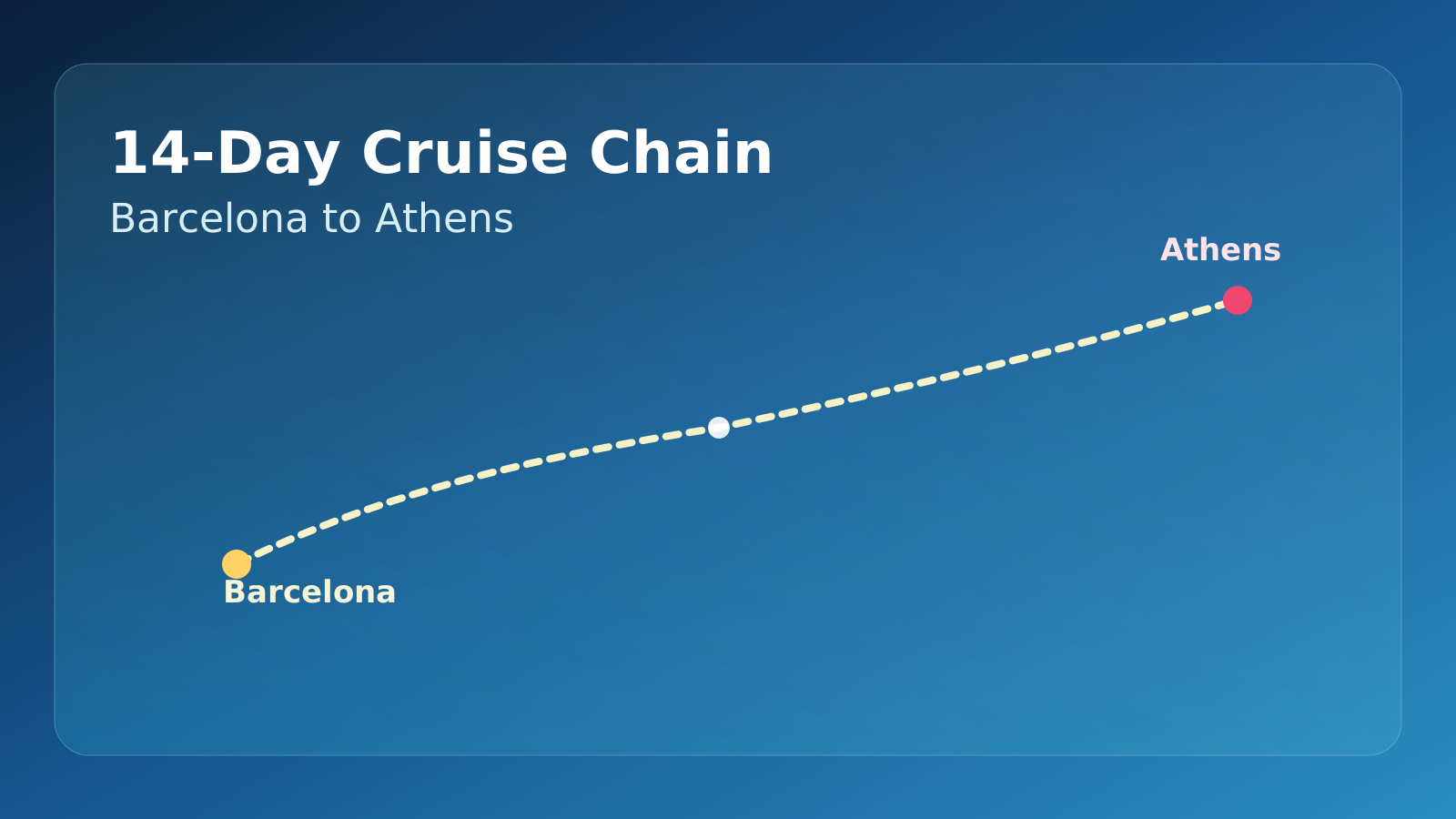
14-Day Cruise Chain: Barcelona → Athens
How to combine multiple cruises from Barcelona to Athens into one continuous journey using compatible routes and ports.
Intro
This 14-day cruise chain connects Barcelona to Athens through two Mediterranean segments that share a practical handoff in Civitavecchia, the main cruise port for Rome. The route is built around regional itineraries that many lines already operate as separate products: Western Mediterranean loops ending in Italy, and Eastern Mediterranean sailings departing from Italy toward Greece. Chaining those sailings creates one continuous journey without requiring an intercity flight between major legs.
Travelers frequently search this as the “Barcelona to Athens cruise chain” because it connects mediterranean ports through one practical handoff structure.
The route is best suited for travelers who want broad Mediterranean coverage in one trip, but still prefer manageable segment lengths of about one week each. It also fits travelers who value destination variety over onboard novelty, because ship and line can change between segments.
Route Overview
The most common order is:
- Barcelona
- Palma de Mallorca or Valencia
- Marseille or Toulon
- Ligurian coast stop such as Genoa, La Spezia, or Savona
- Civitavecchia (Rome handoff)
- Naples or Sicily stop
- Greek Ionian or Aegean call such as Corfu, Katakolon, Santorini, or Mykonos
- Piraeus (Athens)
Port order can vary by operator, weather routing, and berth allocation. What matters for chain design is that both segments regularly include Civitavecchia and can be paired with a same-day or one-night transition.
Why It Works
The chain is logical because the Mediterranean is already split operationally into western and eastern deployment patterns. Cruise lines position ships around those subregions for fuel efficiency, turn-port logistics, and demand cycles. Barcelona is one of the strongest western embarkation hubs, while Piraeus is a major eastern endpoint, so the combined route follows existing network behavior rather than forcing unusual positioning.
Port compatibility is strong at the handoff. Civitavecchia supports high cruise throughput, frequent transfers to Rome airports and hotels, and regular embarkation cycles. That reduces friction if the two segments are on different lines.
Date flexibility is another advantage. Western and eastern seven-night itineraries typically run in repeating patterns, so if one pairing does not align, nearby departures often do. A one- to three-day buffer in Rome improves matching options and lowers risk from delays.
Segments
Segment 1: Barcelona to Civitavecchia (about 7 nights)
This leg covers western ports with short sailing distances and frequent city-intensive calls. It is usually port-heavy, making it appropriate for travelers who want urban stops and limited sea-day time.
Compatibility criteria:
- Arrival into Civitavecchia in the morning or early midday.
- Reliable terminal operations for disembarkation and baggage handling.
- A calendar pattern that overlaps with eastern departures within a short window.
Segment 2: Civitavecchia to Athens (about 7 nights)
The second leg shifts toward southern Italy and Greek islands, usually with one or two longer overnight transits. It balances classic archaeological ports with resort-oriented island calls.
Compatibility criteria:
- Departure timing that allows practical transfer from the first segment.
- Clear terminal information, because Civitavecchia can have multiple active piers.
- Final arrival in Piraeus with onward transport options into Athens.
Availability
This chain is primarily seasonal. The broad operating window is late spring through early autumn, when both western and eastern Mediterranean capacity is high. Shoulder months on either side of peak summer can still support the chain, but frequencies are lower and exact pairings are less dense.
Winter combinations exist but are less consistent because some operators reduce eastern Mediterranean deployment. Travelers using this chain usually keep date ranges flexible rather than targeting one exact departure day.
Context
Within the wider cruise landscape, Barcelona to Athens is a classic inter-regional chain rather than a repositioning route. It sits between short, single-basin cruises and full grand voyages. Compared with a single 12- to 14-night itinerary on one ship, the chain often increases port variety and schedule resilience, because each segment is a standard regional product with established turnaround operations.
This route is most relevant for travelers who want to connect western cultural capitals with eastern island geography in one continuous trip. It is less suitable for travelers who prioritize staying on one ship for the entire duration.
FAQ
Can this chain be done without overnighting in Rome?
Yes, in some weeks. A same-day handoff is possible when arrival and departure times align and terminals are efficient. A one-night buffer remains the safer structure.
Does changing cruise lines break the route logic?
Not usually. The route logic depends on port network overlap, not brand continuity. Civitavecchia is one of the strongest multi-line handoff ports in Europe.
Is this chain realistic outside summer?
It can be, but options narrow. Shoulder seasons usually work better than mid-winter because both basins still have active capacity.
Who benefits most from this chain?
Travelers who value destination breadth, can tolerate one handoff, and prefer flexibility in date windows rather than fixed single-day planning.