· Australia and New Zealand · 4 min read
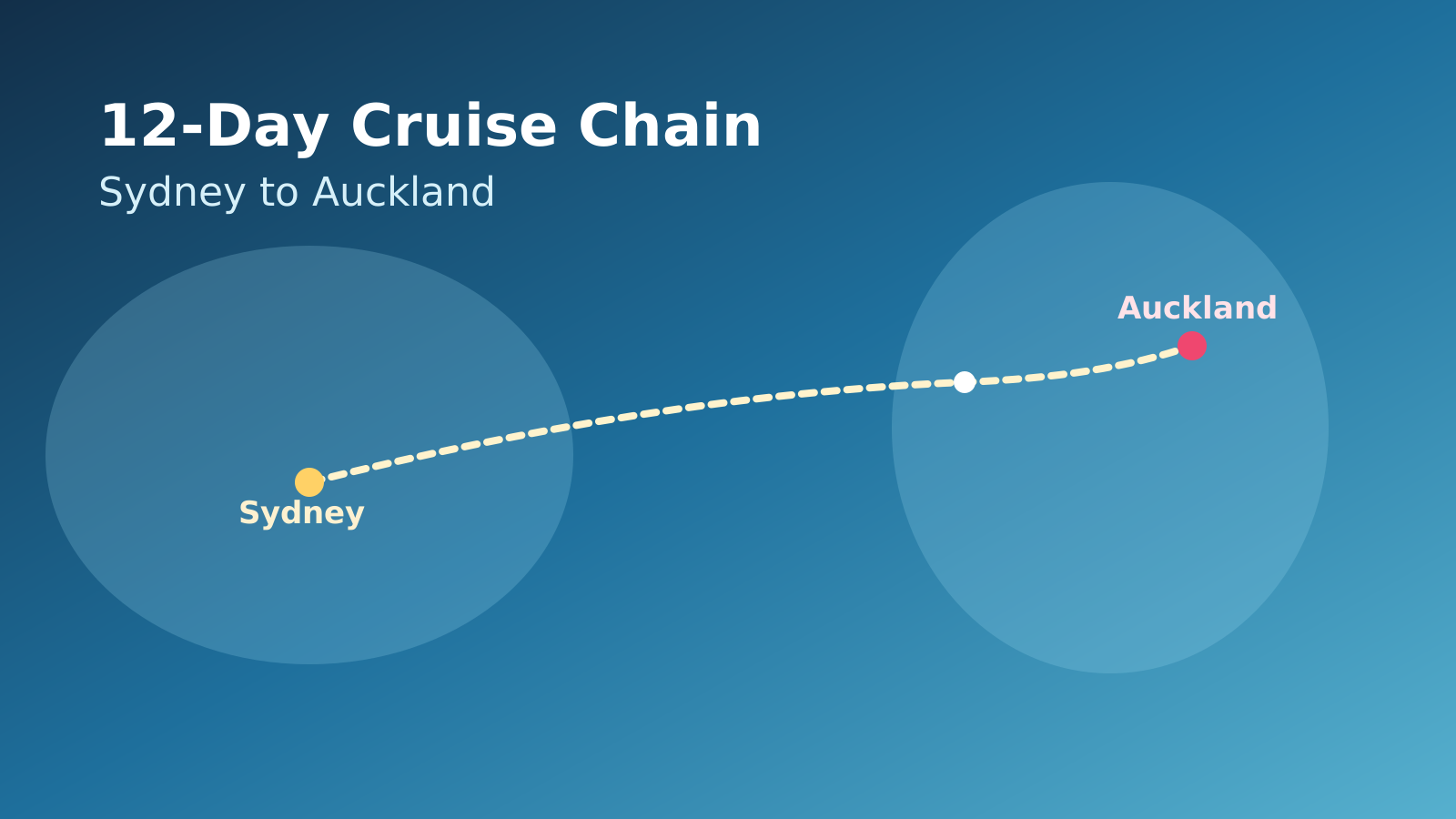
12-Day Cruise Chain: Sydney → Auckland
How to combine multiple cruises from Sydney to Auckland into one continuous journey using compatible routes and ports.
Intro
A 12-day Sydney-to-Auckland cruise chain links an Australia coastal or Tasman segment with a New Zealand-focused continuation. The route uses two major South Pacific homeports and can be assembled from short regional itineraries that are frequently offered during the same season.
Travelers frequently search this as the “Sydney to Auckland cruise chain” because it connects australia and new zealand ports through one practical handoff structure.
This chain is best suited for travelers who want both Australian gateway cities and New Zealand scenic ports in one program, but do not need a single long itinerary on one ship. It also fits travelers who can accept one transfer point and keep handoff dates flexible.
Route Overview
A common sequence is:
- Sydney
- Australian coast stop such as Melbourne, Hobart, or Eden
- Tasman Sea crossing
- New Zealand north-island entry port (often Tauranga or Auckland handoff)
- Bay of Islands, Wellington, Christchurch (Lyttelton), or Dunedin variation
- Fiordland scenic transit in some itineraries
- Auckland
Some chain versions hand off in Sydney before crossing to New Zealand, while others hand off in Auckland after an initial trans-Tasman leg. Both are workable if segment timing and terminal compatibility are clear.
Why It Works
The chain works because Australian coastal and New Zealand circuits are frequently deployed as separate but adjacent products. Sydney anchors many Australia departures, while Auckland and occasionally Wellington anchor New Zealand loops. That creates repeatable connection opportunities.
Port compatibility is strongest in Sydney and Auckland because both ports support regular turnaround operations, air connectivity, and urban transfer infrastructure. This is relevant when segments are operated by different lines.
Date flexibility is important due to variable segment lengths and weather windows in the Tasman region. A one- to two-night transfer buffer is common to absorb schedule shifts and terminal timing differences.
Segments
Segment 1: Sydney to Australia coast or direct trans-Tasman (about 5-7 nights)
This leg can be either a short Australia coastal loop returning to Sydney, or a one-way start toward New Zealand. Port intensity depends on itinerary design, but Sydney departure logistics are usually straightforward.
Compatibility criteria:
- Predictable disembark timing in Sydney or Auckland handoff port.
- Transfer pathways between terminal and hotel or airport.
- A second segment departing within a practical date window.
Segment 2: New Zealand-focused sailing to Auckland (about 5-7 nights)
The second leg usually concentrates on New Zealand ports and scenic passages, with a mix of coastal cities and nature-focused calls.
Compatibility criteria:
- Departure timing aligned with first-segment arrival variability.
- Port sequence that complements, rather than duplicates, the first leg.
- Final arrival in Auckland with reliable onward transport options.
Availability
This chain is predominantly seasonal, with strongest availability during the Austral summer period and adjacent shoulder months. During that window, Australia and New Zealand deployments overlap enough to support multiple pairings.
Off-season combinations are possible but less frequent, and weather can influence call substitutions in exposed ports. Flexibility in both departure week and handoff city improves the probability of a stable chain.
Context
Within the global cruise network, Sydney-to-Auckland chaining is a regional connector route rather than a long repositioning arc. It combines two nearby but distinct cruising zones: Australia coastal calls and New Zealand scenic/coastal itineraries.
Compared with a single round trip from Sydney, this chain usually delivers more New Zealand depth. Compared with a one-way stand-alone trans-Tasman itinerary, it adds Australian context before arrival in New Zealand.
FAQ
Is Auckland always the best endpoint?
Auckland is the most common endpoint for this chain, but some combinations can end in Wellington depending on seasonal schedules.
Can this route be done without changing ships?
Occasionally, but the chain model assumes two segments and often two different vessels.
How much schedule buffer is recommended?
One to two nights is common, especially in seasons with variable Tasman Sea conditions.
Who benefits most from this chain?
Travelers seeking balanced Australia-New Zealand coverage, with moderate segment lengths and flexibility around exact sailing dates.