· Asia · 4 min read
20-Day Cruise Chain: Singapore → Tokyo
How to combine multiple cruises from Singapore to Tokyo into one continuous journey using compatible routes and ports.
Intro
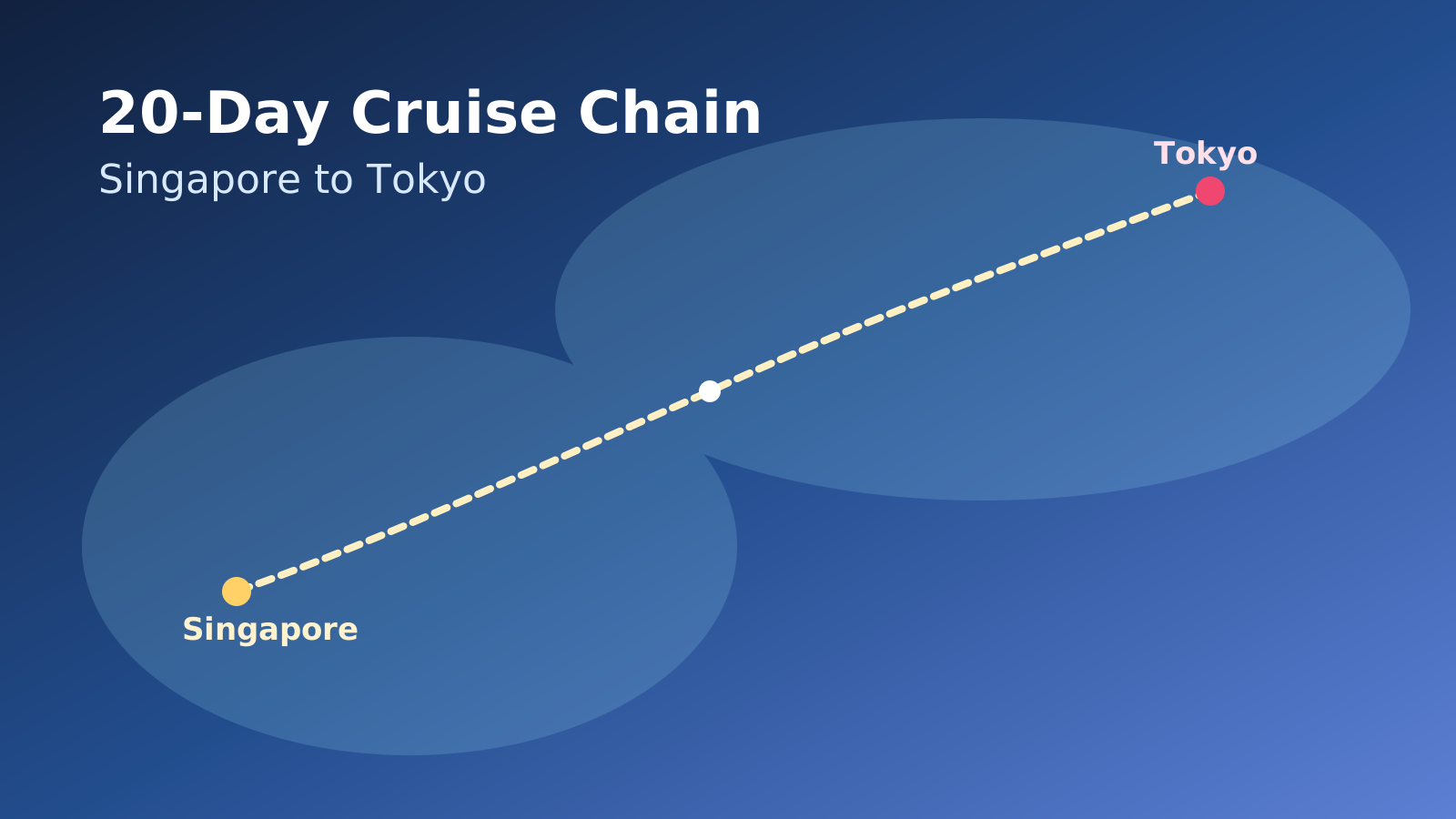
A 20-day cruise chain from Singapore to Tokyo links Southeast Asia and Northeast Asia through one intermediary homeport, most often Hong Kong or Keelung (Taipei). Instead of relying on a rare single itinerary that covers the full distance, this chain combines two regional programs that already run at scale.
Travelers frequently search this as the “Singapore to Tokyo cruise chain” because it connects asia ports through one practical handoff structure.
The route is best suited for travelers who want a broad Asia profile in one journey: tropical straits, South China Sea city ports, and temperate Japanese calls. It is also useful for travelers who are comfortable with one transfer point and who keep departure timing flexible.
Route Overview
A frequent structure is:
- Singapore
- Malaysia stop such as Port Klang or Penang
- Thailand or Vietnam call (Laem Chabang, Ho Chi Minh City, Da Nang)
- Hong Kong handoff
- Taiwan gateway call (Keelung or Kaohsiung)
- Okinawa or southern Japan stop
- Osaka/Kobe or Nagoya variation
- Yokohama (Tokyo)
Some versions use Keelung as the handoff instead of Hong Kong. The route remains viable if both segments have consistent port-turn operations and practical transfer windows.
Why It Works
The chain works because Asian deployment is often organized into adjacent regional blocks. Singapore functions as a major embarkation point for Southeast Asia circuits, while Japanese homeports anchor Northeast Asia seasons. Hong Kong and Keelung bridge those blocks with frequent multi-line overlap.
Port compatibility is strong at the handoff level. Hong Kong and Keelung both handle turnaround traffic and support onward air and hotel infrastructure. This makes mixed-line combinations operationally realistic.
Date flexibility is essential. Segment lengths in this region can be 5, 7, 10, or 12 nights, and not every cycle aligns cleanly. A one- to three-night handoff buffer improves match rates and accommodates immigration processing differences across ports.
Segments
Segment 1: Singapore to Hong Kong or Keelung (about 9-11 nights)
This leg typically includes tropical and subtropical ports with a mix of city and coastal calls. It may have more sea-day variation depending on whether Vietnam and Thailand calls are both included.
Compatibility criteria:
- Arrival at a handoff port with regular turnaround facilities.
- Terminal logistics that support independent transfer between lines.
- Calendar overlap with northbound segment departures.
Segment 2: Hong Kong/Keelung to Tokyo (about 9-11 nights)
The second leg moves north into East China Sea and Japanese waters, often combining island calls with major urban gateways. It usually ends in Yokohama for Tokyo access.
Compatibility criteria:
- Departure windows that absorb minor delays from first segment.
- Port sequence that stays seasonally appropriate for regional weather.
- Final arrival with reliable transport into the Tokyo metro area.
Availability
This chain is generally strongest in spring and autumn when Northeast Asia deployment is broad and weather conditions are moderate across both segments. Summer availability can still be high but may include weather-related adjustments in typhoon periods. Winter availability depends on yearly line deployment in Japan and adjacent waters.
A flexible date approach is important because the two segments may not align weekly. Allowing several possible handoff dates usually produces better continuity and fewer forced gaps.
Context
In the broader cruise map, Singapore-to-Tokyo chaining is a cross-latitude route that connects two major Asian cruising subregions. It differs from pure Southeast Asia loops and from short Japan-only itineraries by offering geographic contrast across climate zones and port styles.
This route is most appropriate for travelers seeking macro-regional coverage without committing to a very long repositioning voyage. It is less suitable for travelers who want one ship and one onboard routine for the full journey.
FAQ
Is Hong Kong always the best handoff point?
Not always. Keelung can be equally practical when northbound departures align better.
Can this route work with no overnight stay between segments?
Occasionally, but one or two nights is usually more reliable for transfers and schedule variation.
How much does season affect route shape?
Significantly. Seasonal weather and deployment cycles can change both call order and available pairings.
Who is this chain best for?
Travelers who want high regional diversity, can handle one handoff, and can keep date choices open.